
How the AI reads a horse, step by step.
Plenty of people have been told that AI is clever without ever being shown what it actually does. So here is a real analysis, start to finish, on a real horse, with nothing left out. No jargon. If you have judged a horse in your life, you will recognise every step, because they are the steps you already take.
The short version is this. The AI does not have a hunch and it does not have an opinion. It measures things, it checks its own measurements, it writes down what it found, and where it cannot see something clearly it says so and stops. That last part is the one that matters most, and it is the part you will see it do below.
Six steps on one horse.
This is our own footage of a yearling standing in the parade ring, and this is exactly what happened when we put it through the engine.
It picks one still frame
You cannot measure a horse that is moving, so the first job is to stop the film on a frame where the horse is standing square and side on. The AI holds that frame and works on it, the same way you would step back and take a proper look rather than judge a horse on the walk past.
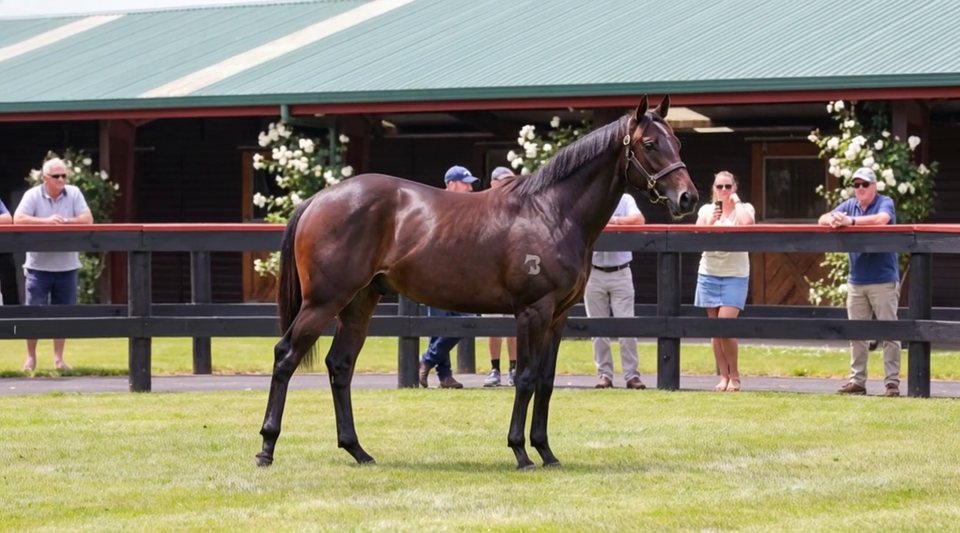
The frame the analysis below was taken from. Our own footage.
It finds the points on the horse
Every angle a horseman talks about is really two or three points on the body and the lines between them. The shoulder is the wither and the point of the shoulder. The hock angle is the stifle, the hock and the fetlock below it. So the AI marks those points first, before it measures anything at all.
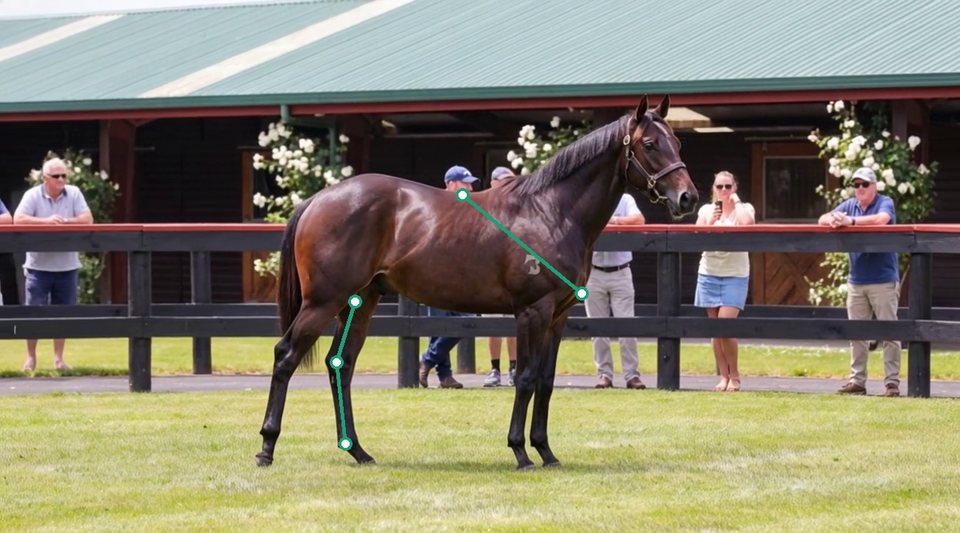
Five points and the lines between them. Nothing has been measured yet.
It checks its own work
A point in the wrong place gives a confident answer that happens to be wrong, which is worse than no answer. So before anything is measured, every point is put back on the picture and looked at again, zoomed right in, to confirm it is sitting on the anatomy and not on a shadow or a rail behind the horse. Only points that survive that check are used.
It measures, and it does not round in its own favour
Now the maths. The angles come straight off the points, and they are reported to the tenth of a degree rather than tidied up. That matters here: the shoulder came out at 39.6 degrees, and the accepted range for a good sloping shoulder starts at 40. Rounded to a whole number it would read 40 and look ideal. It is not ideal, it is a shade straighter than ideal, and the report says so.
It refuses to guess the rest
There are four more angles the AI would like to have: the pastern, the topline, the set of the neck, and the balance of leg to body. It could not get any of them honestly from this frame. The horse is a dark bay standing against a dark stable line, and his feet are down in the grass. Here is the picture it looked at when it tried to find the fetlock and the hoof.
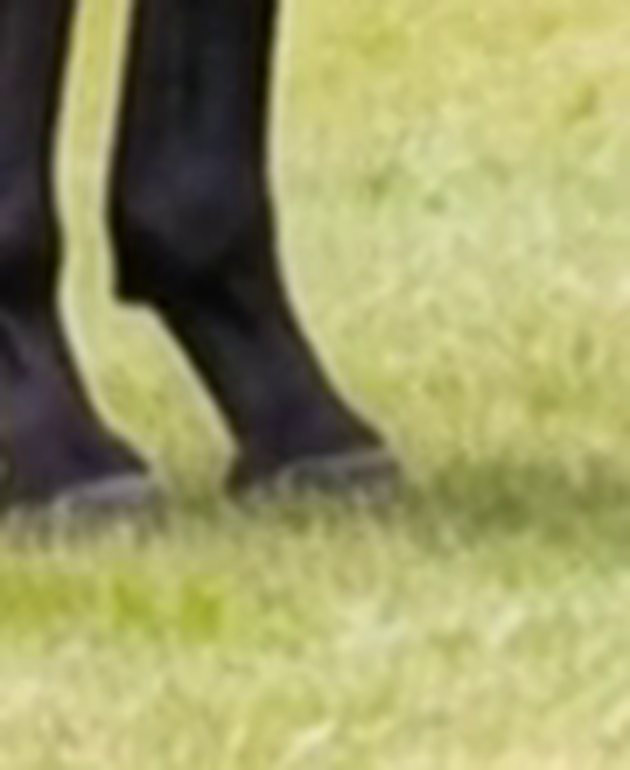
The bottom of the leg, magnified. The hoof is in the grass. No measurement was taken.
A lesser system would put a point somewhere sensible and produce a number anyway. Nobody would ever know. Ours leaves the four angles blank, records why, and lowers its own confidence to match. You are told what it could not see.
It scores, and shows every reason
The score is not a black box. It starts from a neutral 70 and moves only on things the AI actually measured, and every movement is written out in plain English. Two angles were read on this horse, so the confidence is marked low. That is the honest position, and it is printed on the report.
What it will never do.
If you have been suspicious of anything with AI written on it, these are probably the reasons why. They are the rules we built the thing around.
It will not make a number up
If a measurement cannot be taken cleanly, it stays blank. The report tells you it is blank and why. A gap you can see is worth more than a number you cannot trust.
It will not diagnose your horse
It reads the films for risk and points your vet at what deserves a proper look. That is decision support. It is not a veterinary diagnosis and it never replaces your vet.
It will not promise you a winner
Nothing on earth can. Racing luck, training and the horse himself decide that. The report separates what can be measured from what nobody can predict.
It will not replace your eye
It reads every lot in the book so nothing gets past you, then hands you the reasoning. What you do at the rail, and what you bid, stays yours.
The point of all this. A person can read maybe forty lots properly in a week at a sale. The AI reads every one of them to the same standard, at the same hour of the night, without getting tired and without falling in love with a horse. Then it shows you its working, so you can disagree with it. You are not being asked to trust a machine. You are being handed the measurements and the reasons, and you make the call.
See it read a catalogue of your own.
Join the early access list and tell us which sales you work.
Join the early access list